Ghana’s Vice President, Professor Naana Jane Opoku-Agyemang, has called for the rapid development of the Volta Lake as a logistics and commercial transport corridor linking the country’s southern and northern regions.
She said the project could strengthen trade, support agricultural growth and create jobs by combining road, rail and water transport, while also creating new economic opportunities for communities along the lake.
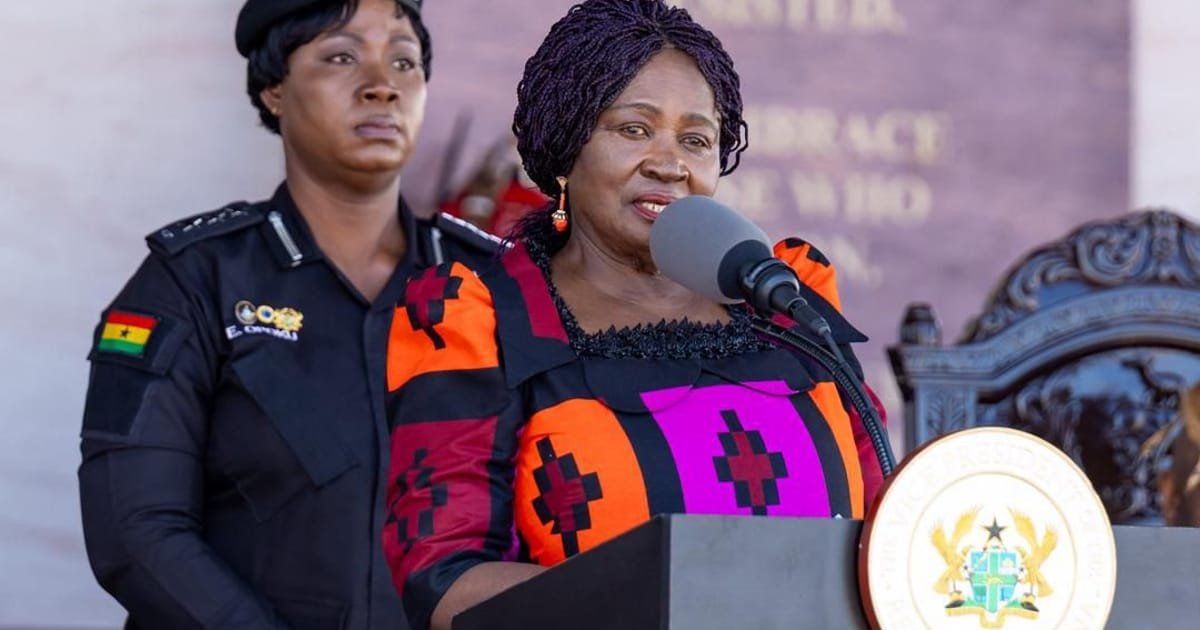
Speaking at the World Bank Western and Central Africa Senior Leadership Team Retreat in Accra on 3 September 2026, Prof. Opoku-Agyemang said the Volta Lake offered Ghana a significant opportunity to reshape its economic geography.
Under the proposed model, goods would travel from Tema to Akosombo by road or rail before being transferred to commercially operated barges for transport across the lake. At inland terminals, the cargo could then move onto road networks serving Tamale and markets in Burkina Faso, Mali and the wider Sahel region.
“If properly developed, it can connect northern Ghana more efficiently to the south, support agriculture, facilitate trade, create industrial activity, and open opportunities for communities,” Prof. Opoku-Agyemang said.
She presented the initiative as more than a transport scheme, describing the lake’s potential to become a major “jobs corridor”. In her view, investment in the necessary infrastructure could encourage industrial and commercial activity along the route and generate productive employment.
The Vice President said the government was prepared to work with the International Finance Corporation (IFC) to design the Volta Lake Transport Project so that it was commercially viable, appealing to private investors and aligned with Ghana’s wider economic strategy.
She outlined possible contributions from across the World Bank Group. The World Bank could support public infrastructure, institutional capacity and the policy environment, while IFC could assist with transaction structuring and the mobilisation of private capital. The Multilateral Investment Guarantee Agency (MIGA), she added, could help reduce qualifying investment risks.
Prof. Opoku-Agyemang said the proposal reflected a broader change in Ghana’s development approach, with public resources being used to attract significantly larger levels of private investment.
She argued that the country needed to move away from funding isolated projects and focus instead on building economic ecosystems capable of supporting enterprises and creating productive employment on a large scale.
The proposed corridor forms part of the government’s wider economic transformation plans, including the 24-Hour Economy, the Big Push infrastructure programme, agricultural transformation and accelerated export initiatives.
Prof. Opoku-Agyemang said those programmes needed to be linked more deliberately so that infrastructure supported production, finance reached investment, skills were connected to enterprise and Ghanaian companies gained access to larger markets.
She also highlighted the importance of regional commerce through the African Continental Free Trade Area (AfCFTA). Ghana’s progress, she said, should ultimately be judged by whether local businesses could use the continental market to expand.
Efficient logistics would be essential if Ghanaian manufacturers, farmers, service providers and technology firms were to compete successfully in regional value chains, she added.
The Vice President said the central goal was to create productive employment on a scale that reflected the ambitions of Ghana’s growing population.
“The task now is to bring these efforts together around a coherent jobs strategy; linking skills to enterprise, infrastructure to production, finance to investment, and our firms to larger markets,” she said.
Prof. Opoku-Agyemang said Ghana was ready to collaborate with the World Bank Group, IFC, MIGA, the private sector and development partners in advancing the country’s economic transformation agenda.