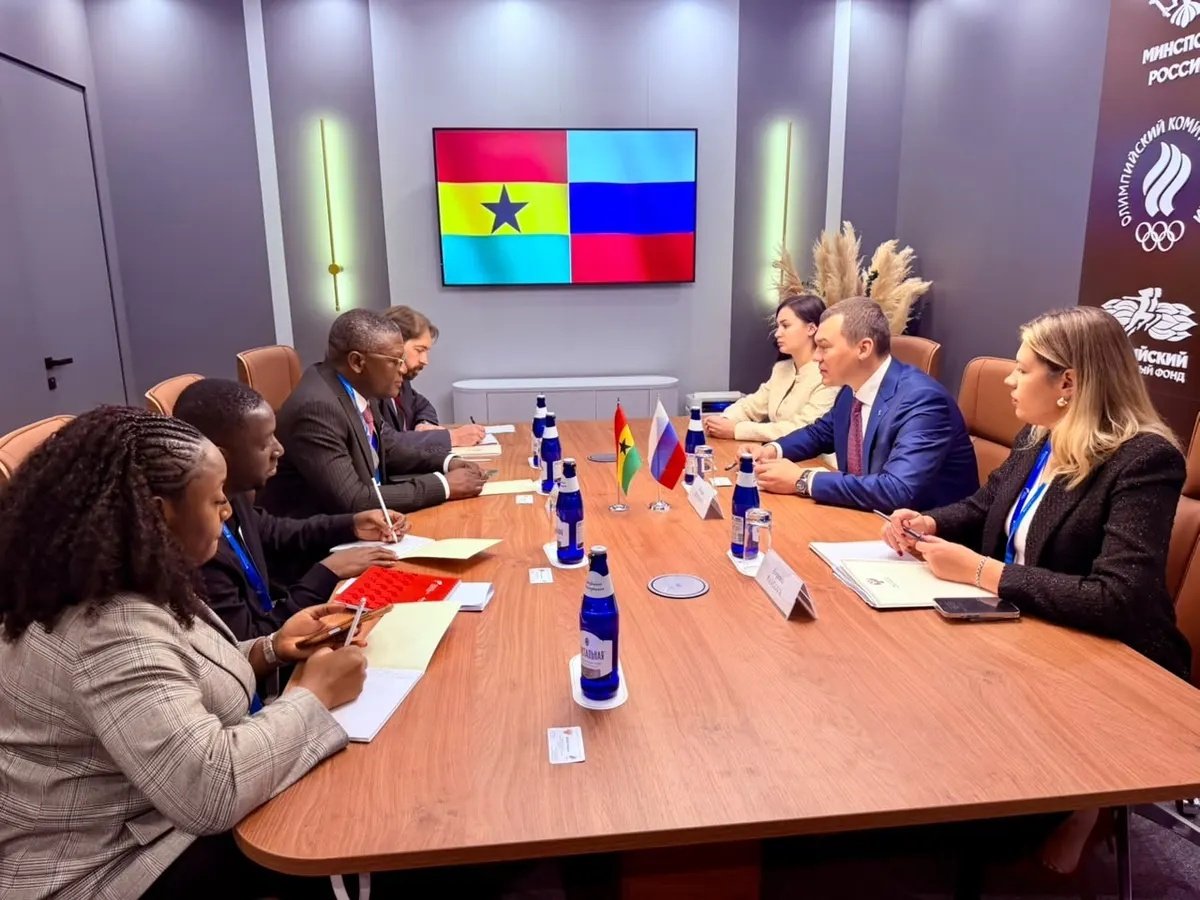
Ghana’s Minister for Sports and Recreation, Hon. Kofi Iddie Adams, has discussed a proposed Memorandum of Understanding with his Russian counterpart, Mikhail Degtyarev, aimed at expanding cooperation in sports development.
The talks took place in Krasnoyarsk on the sidelines of the 14th International Sports Forum “Russia: Country of Sports”. They covered collaboration across sporting disciplines, athlete training, scholarships, school and grassroots sport, sports financing and anti-doping measures.
Preparing a draft of the proposed MoU was identified as the next step towards establishing a formal framework for cooperation between Ghana and Russia. The agreement would set out priority areas and responsibilities as the partnership develops.
Mr Adams placed particular focus on opportunities for young Ghanaians to study and train in Russia while developing their sporting abilities. He also outlined efforts to restructure school and grassroots sport in Ghana, stressing the need for stronger systems to identify promising athletes and support their progress.
The Russian side indicated that it was prepared to provide more scholarship opportunities for Ghanaian students. Such support could link education with sporting development and future professional opportunities.
The ministers also considered cooperation in different sports and the provision of training that could improve expertise within Ghana’s sports development system. The discussions were intended to strengthen the technical foundations supporting athletes and sporting programmes.
Sports financing was another key issue. Mr Adams presented the Ghana Sports Fund as part of Ghana’s efforts to create a more reliable basis for investment in athlete development, infrastructure and welfare.
The Russian delegation showed interest in the Fund’s structure and operation, including its governance arrangements, revenue sources and how it is managed. The exchange created a potential area for institutional cooperation in addition to the proposed training and scholarship initiatives.
Anti-doping was also discussed, with Mr Adams reaffirming Ghana’s commitment to clean sport. He emphasised the importance of education, fair procedures and safeguarding athletes’ rights throughout the anti-doping process.
He warned against using anti-doping procedures in ways that could unnecessarily damage athletes’ careers. The discussion linked the development of stronger anti-doping capacity with the wider responsibility to guide and protect athletes as they progress.
The two ministers further exchanged views on international sporting cooperation and the importance of preserving opportunities for athletes to train, compete and develop through partnerships.
For Ghana, the proposed MoU could connect reforms taking place at home with international training, educational assistance and technical expertise. It would also provide a basis for a longer-term relationship centred on young people and the development of stronger sporting institutions.