Ghana’s Ambassador to Italy, H.E. Mona Quartey, has used a major seminar at the Meeting di Rimini to promote Ghana’s cocoa sector and encourage stronger international investment in sustainable production.
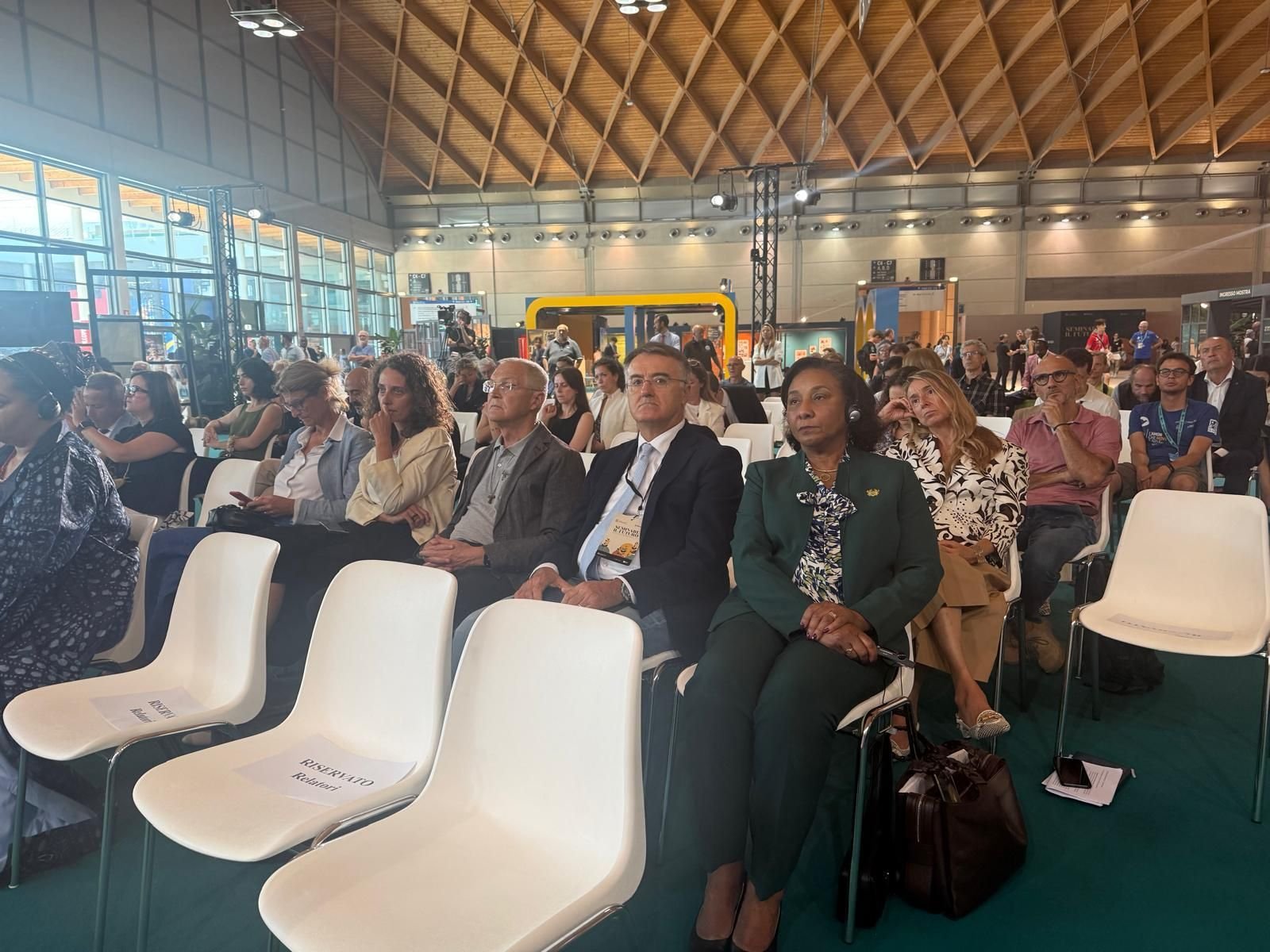
Ambassador Quartey led a diplomatic delegation to the event on Tuesday, 25 August, where she took part in the seminar “Cacao Connect: The Italian Way to the Sustainable Cocoa Supply Chain in Africa”.
She was accompanied by Mr. Kwesi Amuzu-Kpene, Head of Chancery of the Ghanaian Embassy in Rome.
The seminar brought together stakeholders from across the cocoa industry and focused on how Italy can contribute to the development of a more sustainable supply chain in Africa. During the gathering, Ambassador Quartey held detailed discussions with international stakeholders, Italian institutional bodies and leading companies in the cocoa sector.
Those involved included representatives of Italy’s Ministry of Foreign Affairs and International Cooperation (MAECI), Cassa Depositi e Prestiti (CDP), and major industry groups Ferrero and ICAM.
The talks centred on Ghana’s quality standards in cocoa production, as well as the importance of developing public-private partnerships to support the sector. Ambassador Quartey also promoted approaches designed to strengthen climate resilience and ensure fair-trade practices throughout the supply chain.
Her participation provided an opportunity to present Ghana as a key partner in efforts to build a more sustainable cocoa industry. The ambassador stressed the country’s high standards and the potential for closer cooperation between Ghanaian institutions, Italian bodies and private-sector companies.
A central point of her engagement was the Ghana Cocoa Board Bill 2026. The legislation is expected to receive Presidential assent before being passed into law.
Ambassador Quartey said the proposed Bill would be an important asset for Ghana’s cocoa sector. Its expected impact includes improving the fortunes of local cocoa farmers while establishing a more attractive framework for investors interested in local value addition.
The emphasis on value addition reflects Ghana’s ambition to strengthen activity within the cocoa sector beyond the production of raw cocoa. The proposed framework is also intended to make the country more appealing to investors seeking opportunities linked to processing and other forms of local development.
The ambassador’s discussions at the Meeting di Rimini formed part of the Ghanaian Embassy’s wider economic diplomacy efforts. Through that engagement, the Embassy is seeking to position Ghana as a leading strategic partner for sustainable development and agro-processing in Europe.
Her appearance at the “Cacao Connect” seminar also underlined the role of diplomatic engagement in connecting Ghana’s cocoa sector with global businesses and Italian institutions. The focus remained on improving cooperation, supporting farmers, attracting investment and developing a supply chain capable of responding to climate and fairness concerns.
The delegation’s participation therefore combined promotion of Ghanaian cocoa quality with an explanation of the country’s forthcoming legislative changes. It also presented the Ghana Cocoa Board Bill 2026 as a potential foundation for increased investment and greater local value addition.
The event at the Meeting di Rimini was the latest platform through which Ghana has sought to deepen its economic links with Italy and the wider European market.