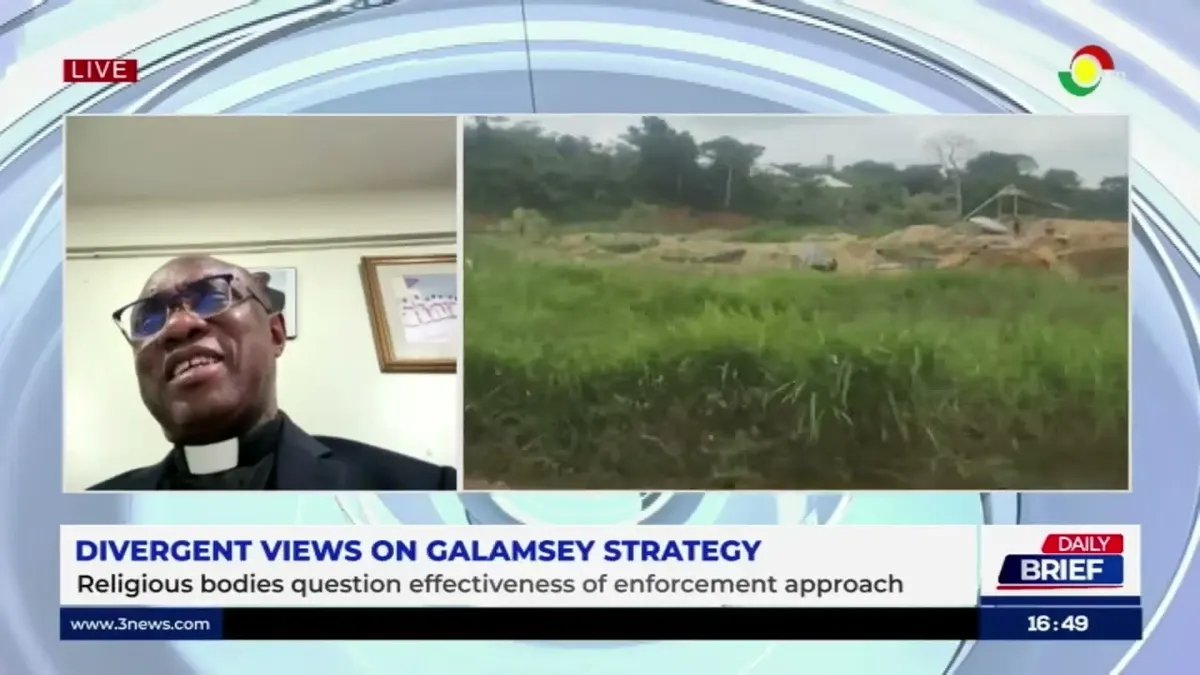
The Lands Ministry says it has created 14 mining cooperatives and halted the smuggling of gold, rejecting concerns from the Catholic Bishops’ Conference that Ghana is losing its fight against illegal mining, known as galamsey.
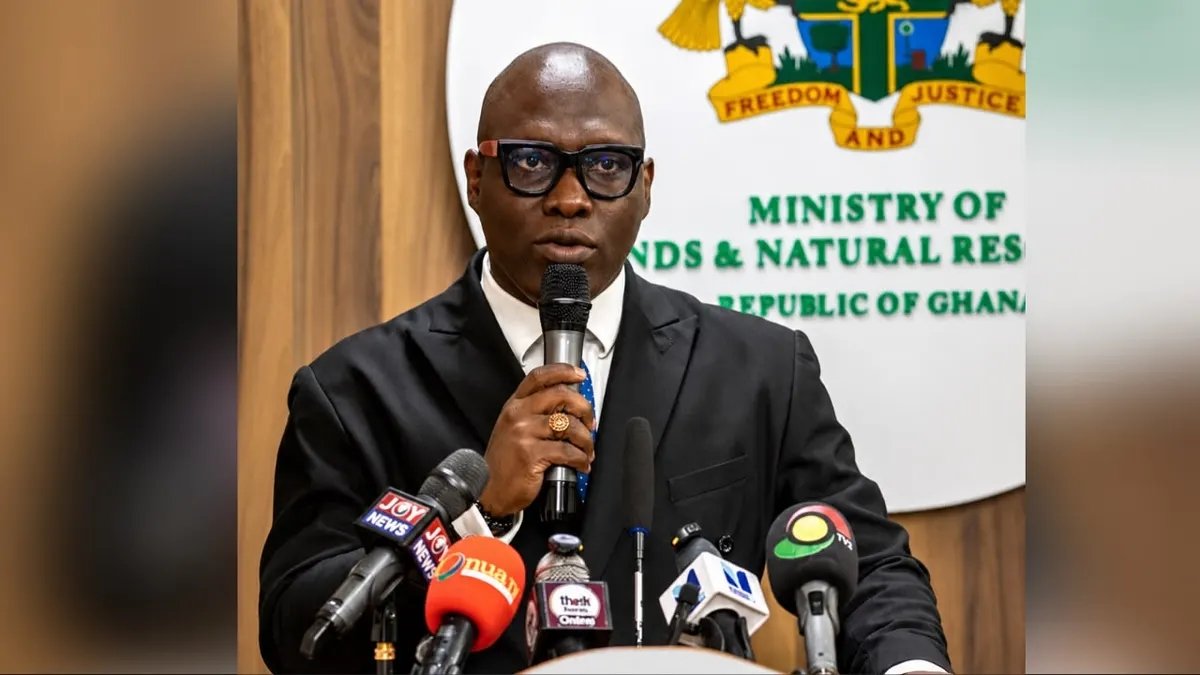
The ministry’s Director of Communications, Zambaga Rufai Saminu, outlined the government’s position during TV3’s Daily Brief on Thursday. He appeared alongside Rev. Fr. Clement Kwasi Adjei, Secretary General of the Catholic Bishops’ Conference.
Fr. Adjei said the time for discussion was running out and that the government needed to take action. He also said the bishops’ hope in the government was fading.
Mr Saminu began by acknowledging the contribution of religious organisations to the national debate on illegal mining, before saying the ministry wanted to present “some of the facts”.
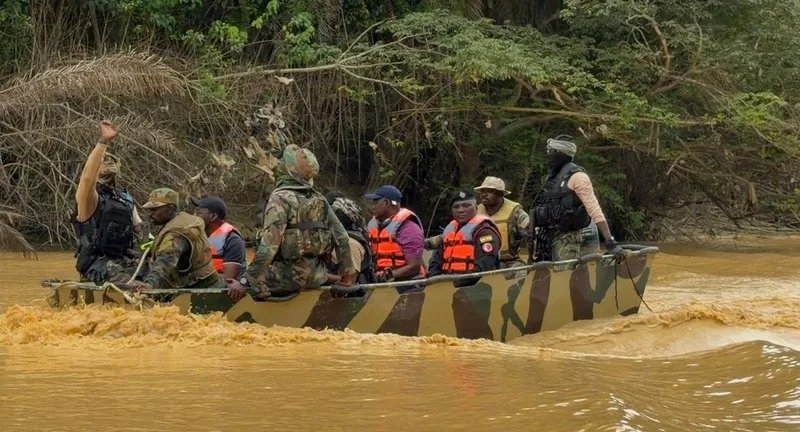
He said security agencies that had previously operated separately in the fight against galamsey had been brought together under NAIMOS, the National Anti-Illegal Mining Operations Secretariat.
The Minerals Commission has separately raised concerns about logistical shortcomings affecting the campaign.
According to Mr Saminu, many illegal miners previously had no alternative source of income. The government had therefore introduced mining cooperatives in affected areas.
“As we speak, we have launched 14 cooperatives in various mining communities,” he said, adding that the initiative was creating employment in those communities.
He also credited the establishment of the Gold Board with ending the illegal movement of gold out of Ghana.
“Has stopped smuggling of gold out of this country,” he said.
Mr Saminu added that mining in a forest reserve was now “an illegal exercise”. He referred to a visit made by the sector minister to a forest reserve several weeks earlier, during which arrests were made. One of those detained was a Nigerian national.
Asked whether the government and the bishops used different standards to assess progress, he said they did not.
“These are verifiable facts,” he said, offering to provide the ministry’s information. However, he acknowledged that more needed to be done.
“Can we do better? Yes,” he said.
Bishops maintain pressure
Fr. Adjei said the bishops based their assessment on conditions in the country’s 20 dioceses, rather than on official claims.
Their measure of success, he explained, was whether fewer illegal miners were operating in forests and on water bodies.
“But this is not the case,” he said.
He argued that the government’s approach to galamsey “is not enough and it’s not achieving the desired end”.
Fr. Adjei also repeated the Conference’s call for a state of emergency in the areas worst affected by illegal mining. The demand was first made public last week.
Manso Keniago deaths
Mr Saminu was also questioned about the shooting in Manso Keniago, where NAIMOS officers are alleged to have shot and killed six young men.
He said a team had been sent to establish what happened and that the ministry would issue a statement “at the appropriate time”.
The information received by the ministry so far, he said, suggested there had been a disagreement between the community and officers returning from an operation.