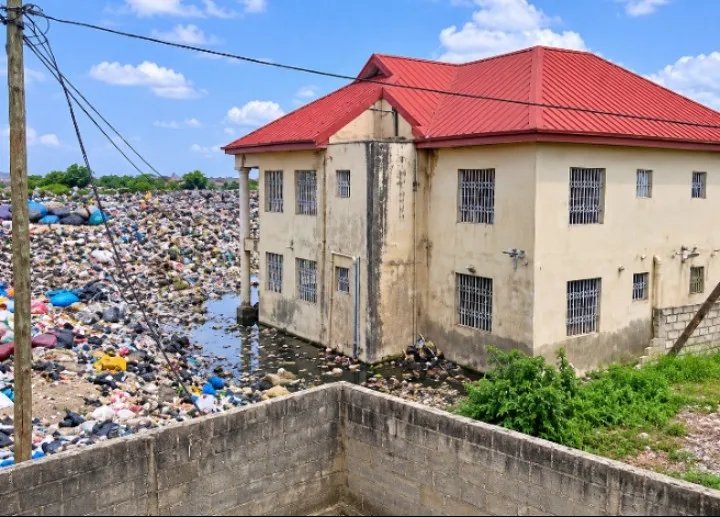
Residents of Sonitra Adekopa in the Ga West Municipal Assembly say a refuse dump in the middle of a residential area is putting their health, safety and well-being at serious risk.
They report persistent foul smells, environmental pollution and conditions they fear could lead to outbreaks of disease. The rubbish has accumulated close to homes, making daily life increasingly difficult for people living in the community.
Some residents say the situation has become so unpleasant that neighbours have left their homes in search of a cleaner and healthier place to live.
They also claim that repeated complaints to the Ga West Municipal Assembly have not led to any meaningful action. The lack of a clear solution has left residents frustrated and unsure when the sanitation problem will be addressed.
In addition to the environmental concerns, residents have made allegations of intimidation and physical attacks against people who criticise the dumpsite.
They claim suspected land guards, commonly known as goro boys, have attacked outspoken residents in their homes. According to the residents, those incidents have created fear and panic in the area and made people reluctant to speak publicly about the problem.
An Onua News team visited the site after receiving complaints from residents and reported seeing deplorable and unsanitary conditions at the dumpsite.
The team then sought a response from the Municipal Chief Executive for Ga West, Desmond Sowah. However, attempts to obtain an interview with him have been unsuccessful for nearly three months.
Residents say the condition of the site is continuing to worsen and are calling on the Ga West Municipal Assembly and other relevant authorities to intervene urgently.
Their demands include the removal of the accumulated refuse and the introduction of sustainable sanitation measures to prevent the situation from developing into a public health crisis.
They argue that a clean, safe and healthy environment is a basic necessity and are urging the authorities to act before conditions deteriorate further.
By Prince Kwakye Ababio