French Ambassador to Ghana Her Excellency Diarra Dime-Labille has called for closer international cooperation to manage the risks associated with artificial intelligence (AI), saying its development must remain ethical and responsible.
Speaking during a visit to the Artificial Intelligence Laboratory at Kwame Nkrumah University of Science and Technology (KNUST), she said Ghanaian researchers and young technology specialists had an important role in ensuring AI was used for the benefit of humanity.
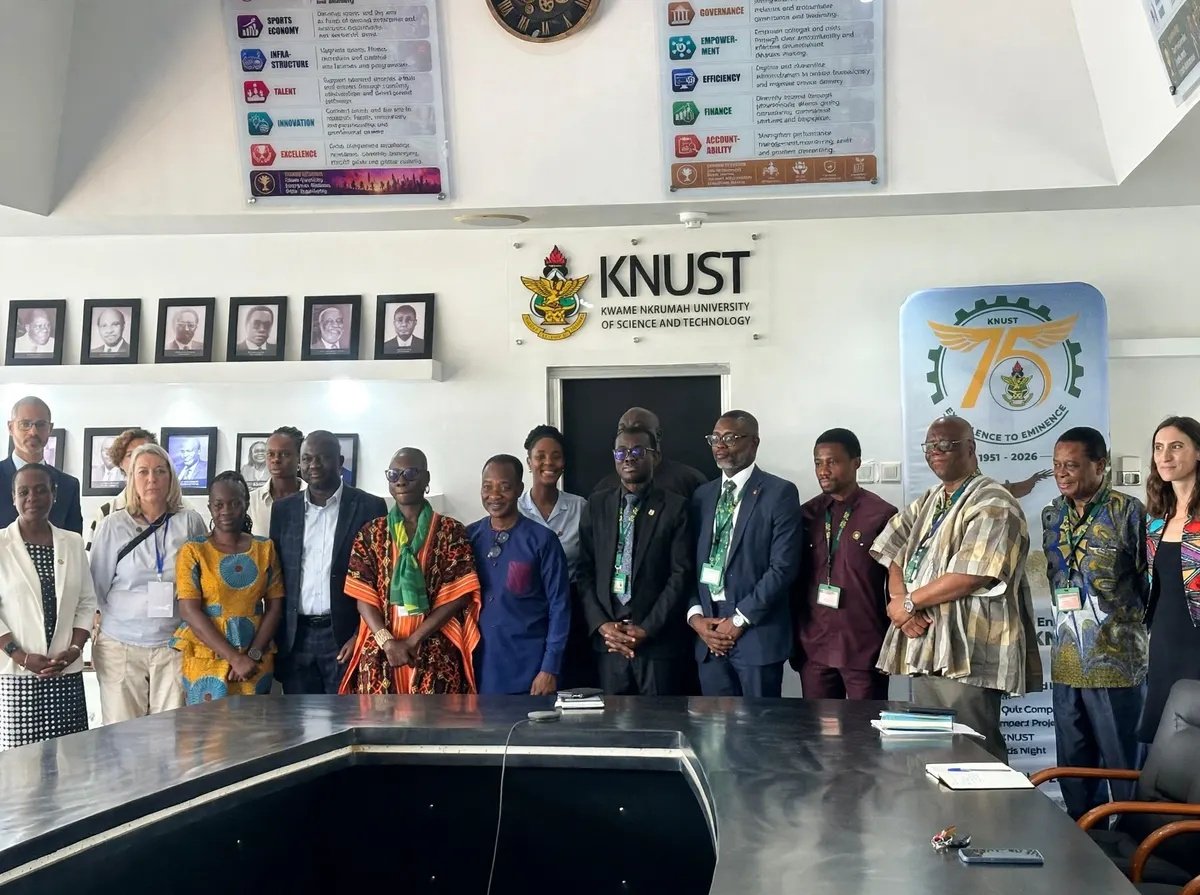
Madam Dime-Labille visited the facility during a two-day trip to Kumasi, running from November 19 to 20, 2026. Following discussions with researchers, she praised the commitment of Ghana’s young AI experts to safety and responsible innovation.
She said Ghana, other African nations and European countries needed to work together to reduce the potential dangers created by artificial intelligence.
> “I was definitely impressed and amazed this morning visiting the AI lab at KNUST. One of the first reflections was when I saw all those young AI experts; they were talking about safeguarding.
>
> “Seeing those young Ghanaian AI experts thinking about it and having this kind of hope makes me very hopeful. I am definitely very happy to hear that those young people are very committed to working in a very ethical and responsible AI.”
The ambassador also pointed to French President Emmanuel Macron’s support for international debate on the effects of emerging technologies. She said the Paris Peace Forum had provided a platform for discussions about the impact of AI and other technologies on children and young people.
KNUST outlines AI research priorities
Professor Samuel Asare Nkansah, a Professorial Member of the KNUST University Council, represented the Vice-Chancellor during the visit. He said the university was prepared to expand its partnerships in artificial intelligence and other digital technologies.
Professor Nkansah said work already being carried out at KNUST was producing applications in several important areas, including climate change, healthcare, energy and agriculture.
> “What we have on the ground now is doing so much in the areas of climate change, health, energy and agriculture. It is even trying to create a new dimension where it is leaving no one behind, getting everybody along and bringing on board those who are deaf to be able to get along without assistance.
>
> “So, more opportunities in digital technologies, harnessing tailored solutions for our country, our university and then the world.”
The ambassador’s programme in Kumasi is intended to identify new areas of cooperation between France and Ghana. It includes meetings with KNUST management, students and city authorities.
She is also due to visit Decathlon, a French retail company operating in Kumasi, and meet dignitaries at Alliance Francaise.
The wider France-Ghana partnership covers research, trade, the promotion of the French language and the development of sustainable cities.