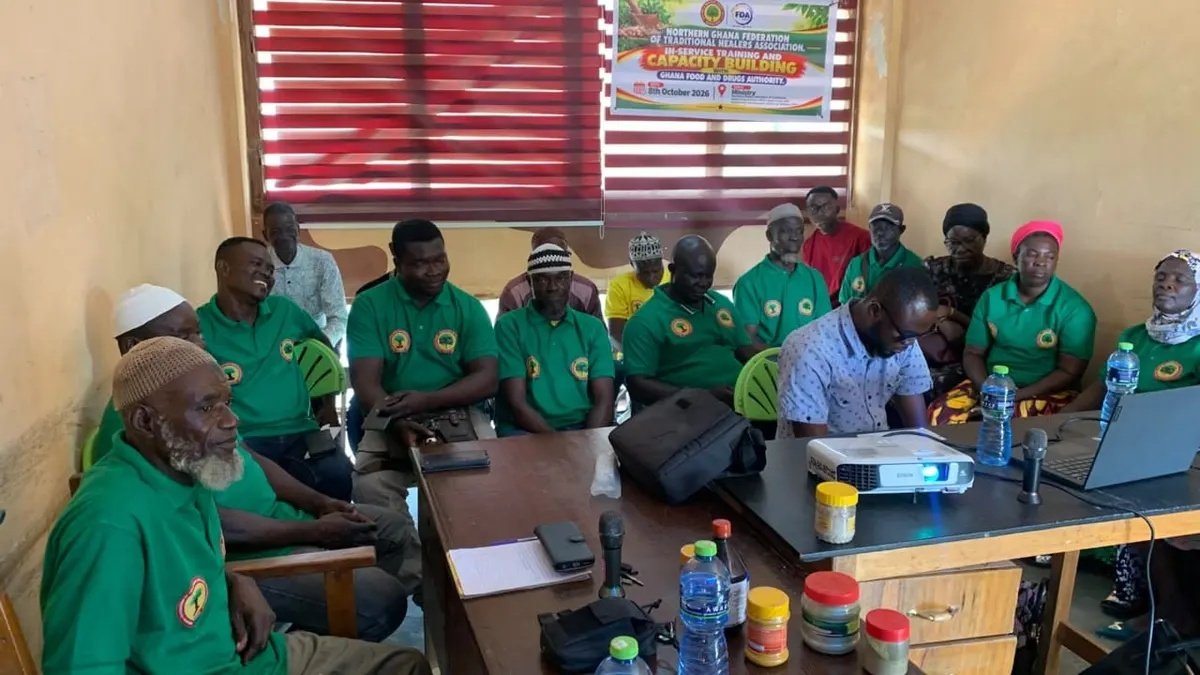
The Food and Drugs Authority (FDA) Ghana has partnered with the Northern Ghana Federation of Traditional Healers Association to strengthen regulatory compliance and improve the safety of herbal medicines across the region.
The collaboration formed part of an in-service training and capacity-building workshop held on October 8, 2026, at the Ministry block housing the Northern Ghana Federation of Traditional Healers Association, alongside the Community Development and Social Welfare offices.
The session brought together herbal medicine practitioners from the northern sector to promote more consistent standards in traditional healthcare delivery. Its focus included regulatory requirements, hygiene, suitable product labelling and the accurate measurement of dosages.
Organisers said the training was intended to ensure traditional medicinal preparations met strict safety parameters before being supplied to consumers.
The workshop also gave practitioners the opportunity to raise concerns about the wider challenges affecting the development of herbal medicine in northern Ghana.
A central issue was the difference in resources available to traditional healers in the southern and northern parts of the country. Participants said practitioners in the South were more likely to receive government assistance and financial backing, while those in the North largely worked without similar support.
“While practitioners in the Southern sector frequently benefit from state support and financial backing, those of us in the North operate largely without assistance,” participants said during the session.
In an appeal made to the media and officials attending the gathering, the practitioners called on the government, relevant authorities and private stakeholders to provide direct financial assistance, infrastructure and equipment.
They said such support was needed to improve working conditions and raise the standard of traditional medical practice in the region.
“We must bridge the divide between the north and south if we are to unlock the full potential of traditional medicine in Ghana.
“Therefore, we urgently appeal to the government and well-meaning citizens to extend the necessary financial and infrastructural support to practitioners in the Upper East Region, ensuring they are equally equipped to serve our communities safely and effectively,” participants noted.
The practitioners said reducing the resource gap between the two parts of the country would help the sector contribute more fully to healthcare provision.
The FDA and local traditional healers hope continued cooperation will support safer healthcare delivery. Stakeholders also want the initiative to encourage greater government investment in the traditional health sector in northern Ghana.