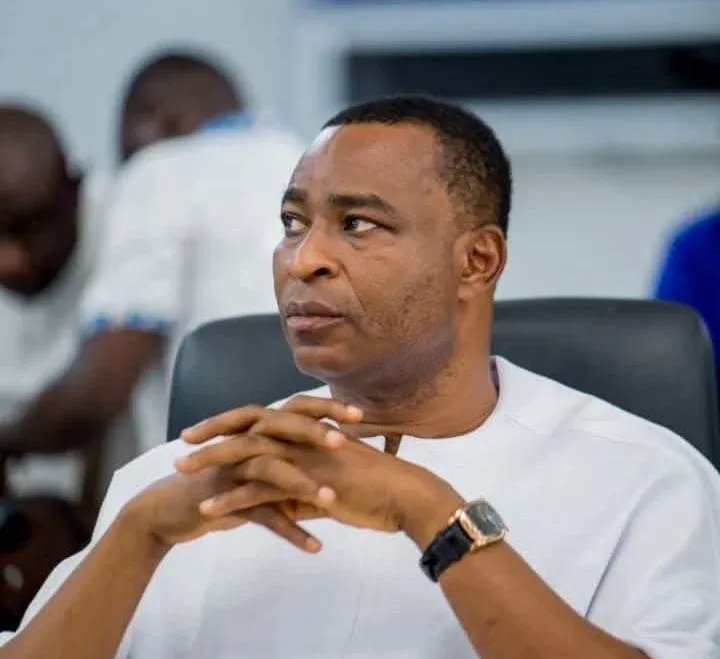
The Court of Appeal will rule on 4 November on Bernard Antwi Boasiako’s application for bail while he challenges his 20-year prison sentence for an illegal mining offence.
Boasiako, popularly known as Chairman Wontumi, is the New Patriotic Party’s Ashanti Regional Chairman. His lawyers, led by Samuel Atta Akyea, told the court on Thursday that he should be released temporarily to help prepare and pursue the appeal.
Mr Atta Akyea argued that the 19 grounds filed against the conviction were substantial and had a realistic prospect of success, rather than simply reflecting dissatisfaction with the trial court’s decision.
He said Wontumi needed access to his legal team both for the appeal and for another criminal case he is facing. The defence also maintained that he had complied with his bail conditions during the trial and would remain in Ghana.
On the legal issues, Mr Atta Akyea argued that the trial judge had not considered the Minerals and Mining Act as a whole, particularly the combined effect of Section 138.
He said a holder of a mineral right could allow another person to conduct mining activities within the concession, and that the actions of that person should not automatically result in criminal liability for the rights holder.
The defence also challenged the prosecution’s reliance on evidence from an alleged accomplice, saying it required careful examination and corroboration.
Responding to concerns that Wontumi might abscond, Mr Atta Akyea said his client’s passport remained with the Economic and Organised Crime Office (EOCO). He added that granting bail would not prevent Wontumi from serving his sentence if the appeal was unsuccessful.
Deputy Attorney-General Dr Justice Srem-Sai opposed the application, arguing that Wontumi had not shown any exceptional circumstances to justify bail pending appeal.
Referring to Fynn v The Republic, Dr Srem-Sai said such applications must be approached cautiously while a valid conviction and sentence remained in force. He argued that Wontumi’s grounds of appeal were not sufficiently strong to establish a realistic prospect of success.
The Deputy Attorney-General said the circumstances in Fynn v The Republic were different because that case involved relatively short prison sentences and concerns over delays in preparing the appeal records. Those factors, he argued, did not apply to Wontumi’s case, where the sentence was 20 years and the trial had concluded within months.
Dr Srem-Sai also described Wontumi as a flight risk because he was facing two other criminal trials that could result in further prison terms. He said the possibility of additional custodial sentences could encourage the applicant to abscond instead of remaining in Ghana to pursue his appeal.
The prosecution further relied on video recordings included in its affidavit. Dr Srem-Sai said the recordings captured Mr Boasiako’s lawyer describing him as unruly and explaining the circumstances of his arrest.
Before the hearing ended, the court asked about preparations for the appeal. Mr Atta Akyea said his team was working with the registry to compile the record and was nearly finished photocopying the relevant documents.
Wontumi was sentenced by the High Court after being convicted of assigning mineral rights without ministerial approval and purposely facilitating an unlicensed mining operation at Samreboi in the Western Region.