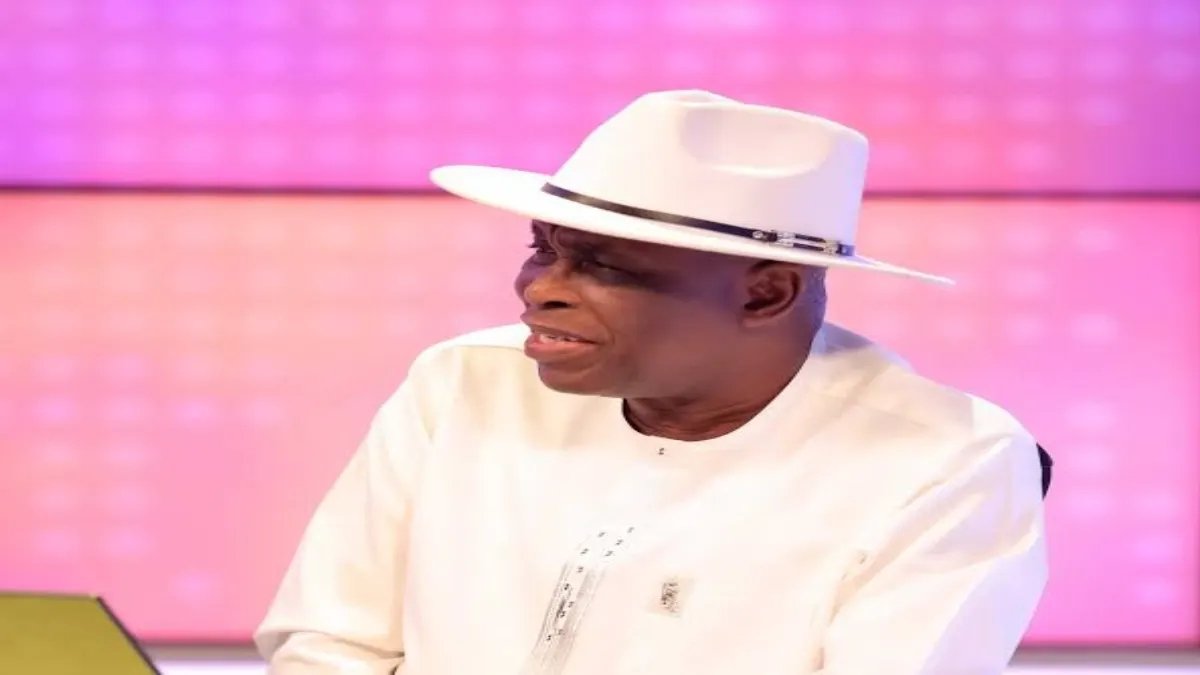
President of Africa Policy Lens (APL), Dr George Domfe, has accused Ghana’s Chief Justice Paul Baffoe-Bonnie of compromising the judiciary’s political neutrality through public comments about the performance of State-Owned Enterprises (SOEs).
Dr Domfe said remarks in which the Chief Justice praised the current performance of SOEs and drew politically sensitive comparisons with the previous administration were inappropriate for the head of Ghana’s judiciary.
He warned that the comments could give the impression that the courts had taken sides in a political and economic debate, potentially weakening public confidence in the judiciary’s impartiality.
“Given the central role of judicial independence in democratic governance, it is essential that judicial actors exercise caution in matters that could be interpreted as political commentary. A more restrained and context-sensitive approach may have helped preserve public confidence in the judiciary’s non-partisan character,” Dr Domfe stated.
The APL president also challenged the economic basis of the Chief Justice’s assessment. He argued that judging SOE performance solely through current financial results could be misleading because a significant part of those results may have been influenced by exchange rate movements.
According to Dr Domfe, the figures did not necessarily demonstrate improvements in operational efficiency, productivity or management. He said treating nominal financial gains as evidence of stronger institutions confused changes in value with genuine performance.
That criticism, he added, applied to the wider economic case being made by government communicators. This includes claims that nominal GDP increased from US$82 billion in 2024 to US$114 billion in 2025, alongside higher GDP per capita and a fall in the debt-to-GDP ratio.
“A substantial share of the reported improvements may reflect exchange rate effects rather than deep-seated structural reforms, productivity enhancements, or sustained growth in the real economy,” APL said.
The organisation said the Chief Justice had failed to examine those headline economic figures with sufficient empirical scrutiny.
Dr Domfe further warned that highlighting nominal indicators without examining the factors behind them could create an excessively positive picture of economic transformation. He said that impression risked overlooking continuing pressure on productive capacity, employment, incomes and living standards.
He said the judiciary’s role in a constitutional democracy was to act as the ultimate guardian of neutrality, rather than appear to endorse government statistics.
“When economic achievements are presented without adequate consideration of their underlying drivers and limitations, there is a risk that public debate becomes centred on political narratives rather than informed analysis,” Dr Domfe noted.
He argued that confidence in the judiciary depended on its public commentary being based on rigorous evidence and free from partisan considerations. Ghana’s democratic stability, he said, relied not only on economic performance but also on the credibility and independence of its public institutions.
“The Chief Justice must demonstrate institutional restraint. The strength of our democracy rests on the judiciary staying above the political fray,” he said.