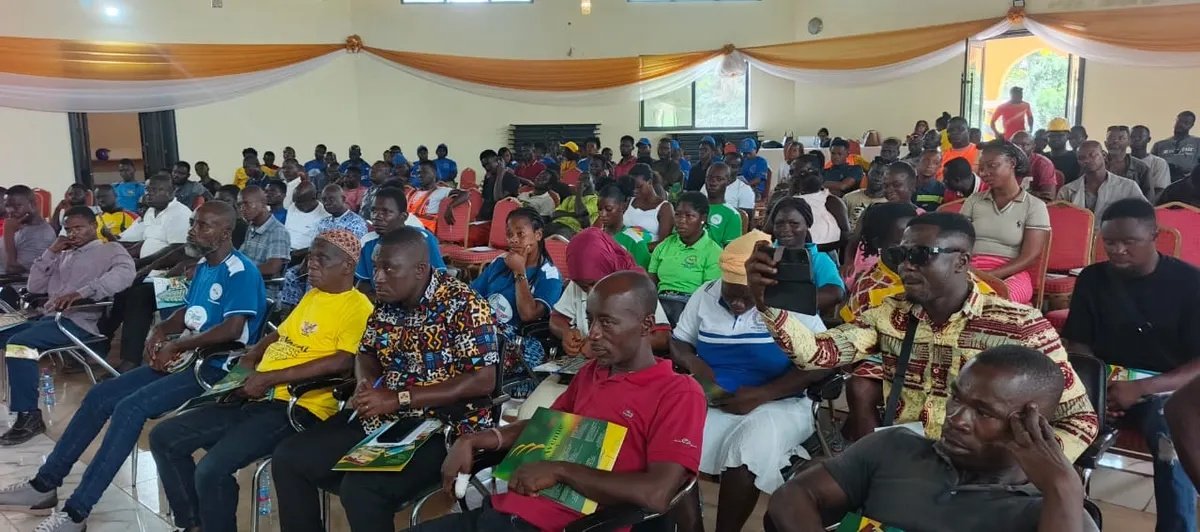
The Bank of Ghana (BoG) has held a one-day financial education programme for traders, mechanics, drivers and other informal-sector workers in Sefwi Wiawso and Juaboso in the Western North Region.
The initiative was organised to help participants manage their money more effectively and forms part of the central bank’s wider efforts to improve financial inclusion and financial literacy.
Taxi drivers, mechanics, traders, carpenters and other members of the informal sector took part in the programme, which introduced them to important banking principles and responsible financial practices.
The training addressed responsible saving and investment, how to identify financial institutions licensed by the Bank of Ghana, and ways of protecting personal banking information. Participants were also shown how to recognise fraudulent financial schemes and how to use complaint-resolution procedures when dealing with financial service providers.
Further guidance covered the correct handling of the Ghana cedi and the security features that distinguish genuine banknotes. Traders and mechanics received additional instruction to support their understanding of financial matters in both their personal and professional transactions.
Mr Albert Fynn, a representative of the Financial Stability Department of the Bank of Ghana, said the programme was part of the central bank’s broader financial education strategy.
He said the strategy was designed to give citizens the knowledge needed to make sound financial decisions.
According to Mr Fynn, the Bank of Ghana had conducted public education campaigns over several years through television, radio and direct engagement with market women and other groups. Those campaigns were intended to inform the public about their rights and responsibilities when using financial institutions.
The sessions in Sefwi Wiawso and Juaboso also explained the rights and responsibilities of customers of regulated financial institutions. Participants were advised to protect sensitive banking credentials, including passwords and personal identification numbers, and were taken through the proper processes for submitting complaints to financial service providers.
Officials also discussed dormant accounts and unclaimed balances. They explained that maintaining regular activity on an account could help prevent it from becoming dormant.
Other presentations examined the implications of guaranteeing loans, the risks associated with illegal digital lending services and the principles of responsible borrowing, including the use of mobile money loans.
Participants were also informed about how loan defaults could affect their future access to credit.
Mr Fynn urged the public to recognise Ghanaian banknotes and coins as legal tender and to use them in transactions.
“Another thing we mentioned today is that we are entreating all Ghanaians that the Ghana cedi coin is still legal tender. They are supposed to accept them and also give them out as legal tender in exchange for goods and services.”