Ghana’s legal profession must not be weakened by rivalry between the Ghana Law Society and the Ghana Bar Association, Speaker of Parliament Alban Bagbin has warned.
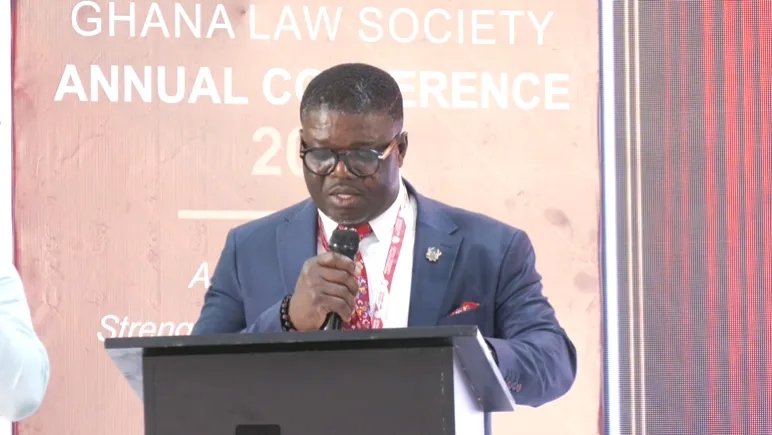
Speaking at the maiden Annual Bar Conference of the Ghana Law Society on September 30, Bagbin said the existence of multiple professional bodies should promote different ideas, rather than divide lawyers into competing groups.
“Professional pluralism must never deteriorate into institutional rivalry,” he said.
“Ghana does not need a legal profession divided against itself. Ghana needs lawyers united around the constitution, justice, professional excellence, and the national interest.”
He called on the leadership and members of both organisations to cooperate, stressing that neither association was greater than the profession as a whole.
“Please work together,” he said.
“The profession is greater than both the Ghana Bar Association and the Ghana Law Society.”
Bagbin proposed formal collaboration between the bodies on law reform, continuing professional education, legal ethics, legal aid, research, technology, justice delivery, judicial independence, mentorship and access to justice.
“The administration of justice belongs to neither the Ghana Law Society nor the Ghana Bar Association. The rule of law belongs to neither. The constitution belongs to neither. They belong to Ghana,” he said.
Speaker warns against rushed laws
Bagbin also urged Parliament to avoid passing legislation without sufficient consultation, saying lawmakers should engage relevant stakeholders and experts before approving new laws.
“We have to work with all the stakeholders and partners to make sure that the laws we pass are really quality laws that can stand the test of time,” he said.
He said law reform should not simply correct existing problems, but should also anticipate unintended consequences by bringing specialist knowledge into the process at an early stage.
Listening to outside input would not reduce Parliament’s authority, he added.
“Parliament does not diminish its authority by listening; Parliament rather strengthens its authority by listening well before it legislates,” he said.
“Some of you lawyers are unguided missiles,” he asserted.
The Speaker also challenged lawyers to place character alongside academic qualifications and professional ability.
“Competence without character is dangerous,” Bagbin said.
He warned that expertise without integrity, empathy and moral restraint could cause harm, particularly because lawyers understand institutions and legal processes that many citizens find intimidating.
Practitioners, he said, must not exploit public ignorance, mislead courts or use professional privilege to obstruct justice.
“The first qualification of a lawyer must be character,” he said.
“Ethics cannot live alone in regulations. Ethics must live in lawyers.”
Lawyers urged to challenge authority
Bagbin encouraged younger lawyers and law students to question those in positions of power and maintain their professional independence.
“Whether it’s the Speaker, whether it’s the IGP, whether it’s CDS, whether it’s the President… none of us is perfect,” he said.
“Be prepared to disagree with us and disagree with us powerfully.”
He said such disagreement should be expressed in “decent, decorous, acceptable language”, without resorting to hate speech. Loyalty to Ghana, he added, could sometimes mean refusing to follow powerful people or the crowd.
Bagbin also warned that technological progress must remain accountable to people and justice.
“An algorithm cannot become a substitute for justice,” he said.
“Efficiency cannot replace fairness, and innovation must never be allowed to outrun accountability.”
He said technology could reduce delays, improve case management and expand access to legal information, but must not undermine fairness.
The Speaker called on lawyers to lead debate on technology, rights and regulation as artificial intelligence, digital finance, cybercrime and automated decision-making create new legal challenges.
He concluded that, despite operating under different institutional names, the Ghana Law Society and Ghana Bar Association serve the same Constitution, courts, profession and people.
“Ghana needs your collective strength more than it needs your institutional differences,” he said.
“Let justice, therefore, be our common cause.”