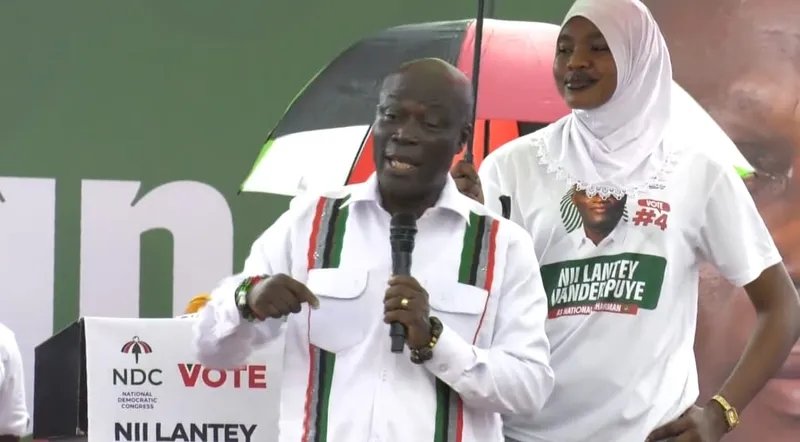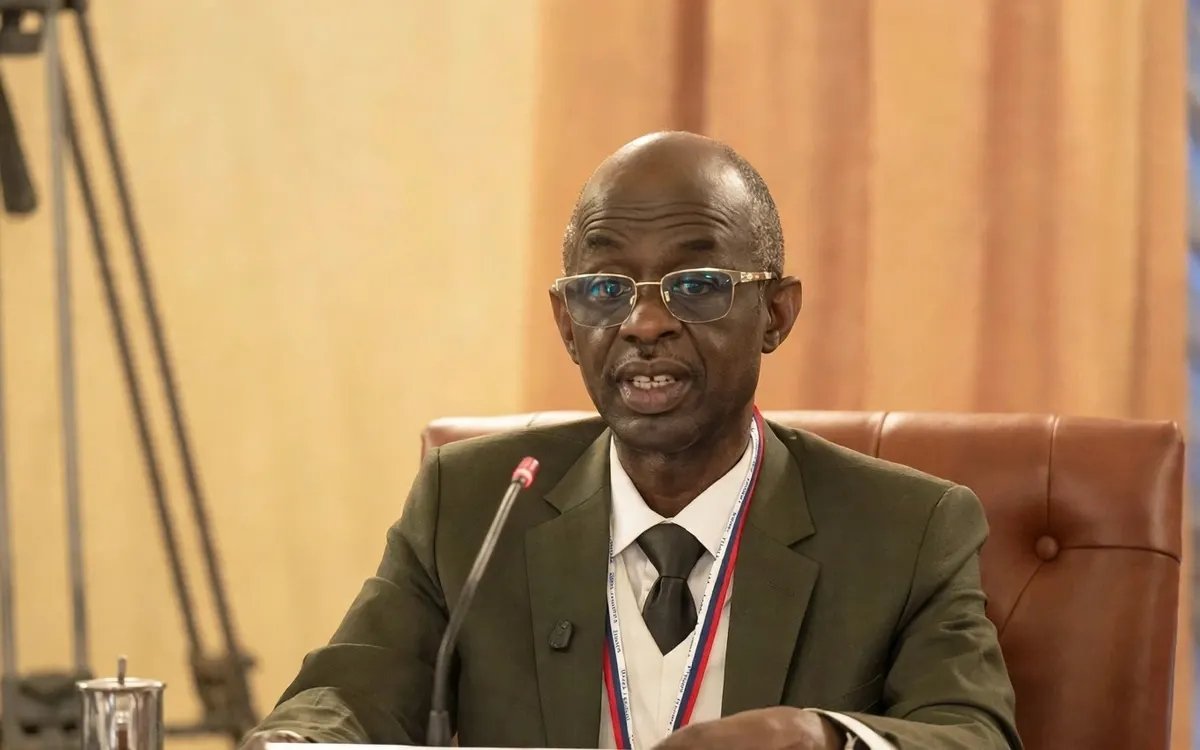
National Democratic Congress (NDC) National Chairman Johnson Asiedu-Nketiah says the Asante people deserve more than symbolic gestures in the global campaign for reparative justice, arguing that looted heritage must be returned with full ownership rather than provided as loans.
Speaking at the Movement for Freedom of Nations Assembly in Moscow on 16 November 2026, he cited the recent return of Asante royal regalia for display at the Manhyia Palace Museum in Kumasi.
Some of the objects were fully restituted, while others were loaned by British museums.
“We appreciate the negotiations that made those arrangements possible, but a loan is not the same as a transfer of ownership,” he said.
“That distinction matters to a community whose heritage is involved, and it reminds us that a remedy must be examined in terms of the rights restored and the obligations actually accepted.”
Asiedu-Nketiah, who is also Chairman of the Bureau Leadership of the African Political Parties Initiative (APPI) and a Member of the Standing Committee of the Movement for Freedom of Nations, said the Asante case reflected a wider weakness in the reparations debate.
He said measures could appear to offer justice while leaving legal ownership, control and accountability unchanged.
Ghana’s history and different forms of redress
Referring to Cape Coast and Elmina Castle, Asiedu-Nketiah said Ghana’s history of enslavement could not be separated from its human consequences.
“In Ghana, anyone who walks through Cape Coast or Elmina Castle encounters something more immediate than a chapter of history,” he said.
“The buildings remain, as do records of the ships, merchants and transactions that made human captivity an international business. Behind those records were families separated, communities weakened and generations denied the freedom to shape their own lives.”
He said claims relating to enslavement, forced labour, dispossession and cultural seizure would require different remedies.
“An identifiable object calls for an inquiry into its provenance and title, while the wider history of trafficking raises questions of responsibility, applicable law and the people entitled to benefit from redress,” he said.
“We should neither treat these questions as already answered nor use their complexity to postpone the work. A credible claim must rest on evidence, and a credible response must be capable of implementation.”
He also warned that ordinary development projects should not be rebranded as reparations.
“An apology, restitution, compensation, access to archives, educational measures and institutional reform may each answer a different injury. But an ordinary development project does not become reparative justice merely because it has been given a new description,” he said.
African Union framework
Asiedu-Nketiah said the African Union had begun turning historical claims into formal negotiating positions. After the Accra Reparations Conference of 2023, the African Union designated 2025 as the Year of Justice for Africans and People of African Descent Through Reparations, extending the commitment through its Decade of Justice and Reparations for 2026 to 2035.
The African Union Committee of Experts on Reparations and its Reference Group of Legal Experts are developing a Common African Position and examining legal, economic, cultural and institutional issues.
He also highlighted cooperation with the Caribbean through links between the African Union expert mechanisms and the CARICOM Reparations Commission.
Asiedu-Nketiah praised President John Dramani Mahama, President of Ghana and the African Union Champion on Reparations, for Ghana’s role in securing United Nations General Assembly Resolution 80/250 on 25 March 2026.
“The 123 votes in favour gave important international recognition to the gravity of the trafficking and enslavement of Africans,” he said, adding that consultations in Accra in June had advanced the debate.
He urged the Movement for Freedom of Nations to support, rather than duplicate, African Union and CARICOM structures.
“Our members can encourage access to archives, assist dialogue with museums and public authorities, and use their relationships with governments and parliaments to support the work already being undertaken by African Union experts and CARICOM,” he said.
“We would accomplish more by lending those institutions political support than by asking them to compete for attention and resources.”
He said governments must define their obligations, parliaments must review laws preventing the return of cultural property, and affected communities must have a voice in agreements intended to benefit them.
Present-day accountability
Asiedu-Nketiah said historical injustice did not remove the duty of current governments to govern effectively.
“Historical injustice does not relieve [governments] of the duty to govern competently, create opportunity and account for public resources, just as the failures of present governments do not cancel legitimate claims arising from the past,” he said.
He called for reparative agreements to be negotiated carefully and administered transparently, with affected communities able to monitor what had been promised and delivered.
“We have reached a point at which Africa need not merely repeat the case it has made for decades,” he said. “The task now is to give that work political weight and practical assistance, and to see that recognition is followed, where responsibility can be established, by remedies that endure.”