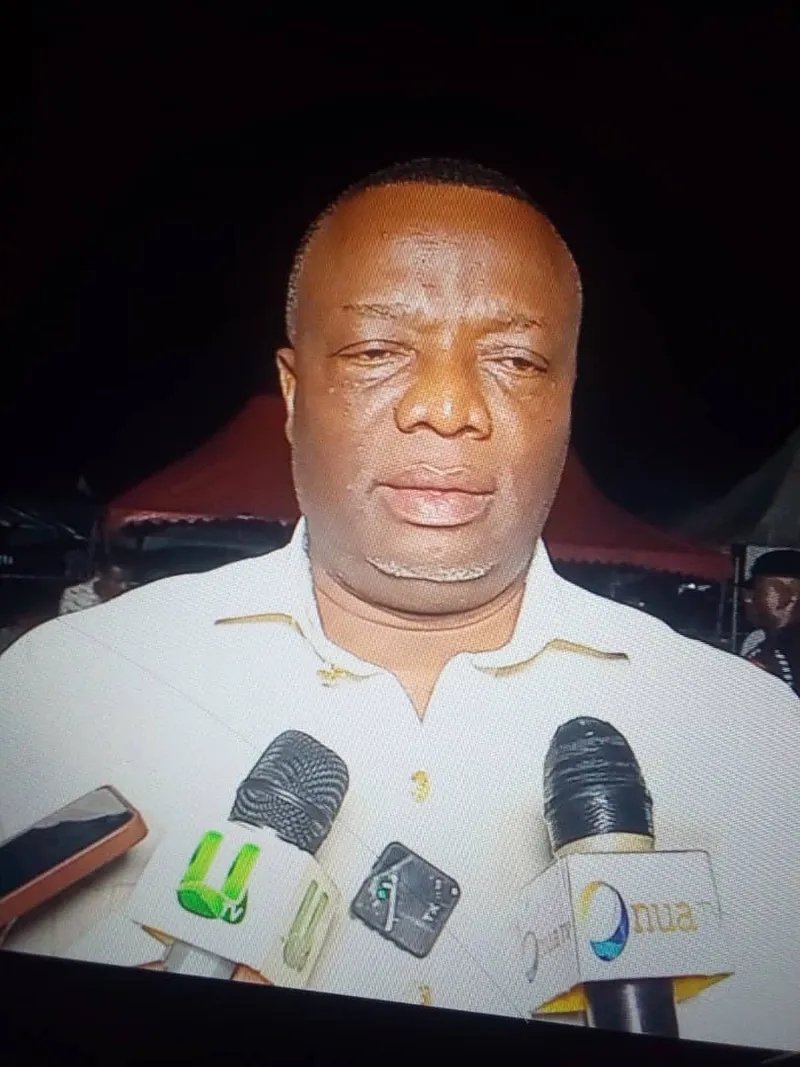
The Ghana Gold Board (GoldBod) has rejected allegations that its Chief Executive Officer, Sammy Gyamfi, endorsed illegal mining, saying a video shared on social media was selectively edited and presented without its proper context.
In a statement issued on 24 October 2026, GoldBod said the footage was recorded during a March 2026 engagement with artisanal and small-scale miners. It said the clip excluded Mr Gyamfi’s explanation of the government’s plan to document mining operators and move eligible informal miners into a lawful, regulated and environmentally responsible system.
The Board said the policy “is not to legitimize illegal mining”, but instead aims to end unlawful activity by placing eligible operators in a framework where they can be licensed, monitored and held accountable.
Reports about the video said Mr Gyamfi appeared to suggest that some unlicensed miners should be assisted in obtaining licences rather than being pursued by soldiers.
The Minority Caucus in Parliament has called for his resignation or dismissal, an apology and sanctions. Kwaku Ampratwum-Sarpong, the Ranking Member of the Lands and Natural Resources Committee, said the position attributed to Mr Gyamfi conflicted with the Minerals and Mining Act, 2006 (Act 703). The caucus also demanded an audit of GoldBod’s traceability records.
A coalition of civil society organisations, including A Rocha Ghana, also called for a public retraction a day earlier, insisting on “no licence, no mining”.
However, the Ghana National Association of Small Scale Miners said Mr Gyamfi’s comments had been taken out of context. The association said they were made at an event it organised jointly with GoldBod at the Kwame Nkrumah University of Science and Technology on 23 March 2026, attended by more than 1,500 mine owners.
In a post on X on 23 October, Mr Gyamfi said mining in water bodies, forest reserves, roadsides and school lands could not be tolerated. He added that formalising other unlicensed miners was preferable to chasing them with soldiers.
GoldBod said that approach was central to its planned Artisanal and Small-Scale Mining (ASM) Formalisation and Financing Support Programme (FFSP). The initiative is being developed with the Ministry of Lands and Natural Resources, the University of Mines and Technology and the Minerals Income Investment Fund, with technical support from Rand Refinery SA.
The programme is intended to increase production, revenues and employment, while reducing costs and limiting environmental damage. Consultations with government bodies, miners’ associations and civil society organisations have started ahead of a planned 2027 rollout.
GoldBod is also working with the Ghana Geological Survey Authority on studies at Funsi and Bensere aimed at ending “lottery mining”.
The Board pointed to its support for the National Anti-Illegal Mining Operations Secretariat (NAIMOS), funding for the reclamation of 50 hectares in the Tano Nimiri Forest Reserve and the procurement of a track-and-trace system.
“These are not the actions or policies of an institution that endorses illegal mining,” GoldBod said.
It added that its position was consistent with Section 3(1)(f) of the Ghana Gold Board Act, 2025 (Act 1140), which requires it to promote the formalisation of small-scale mining through supply chain sustainability. The Act, assented to on 2 April 2025, makes GoldBod the sole buyer, seller, assayer and exporter of gold from the licensed artisanal and small-scale sector.