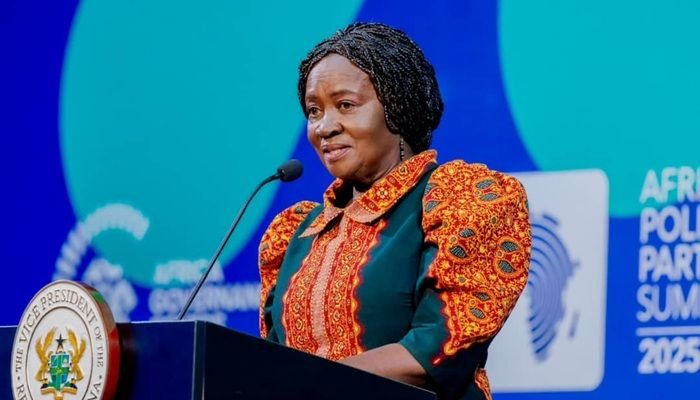
Vice-President Professor Naana Jane Opoku-Agyemang says Ghana must continue modernising its tax system to raise more revenue, encourage voluntary compliance and restore public confidence in tax administration.
Speaking at the 14th Annual International Tax Conference in Accra on 19 August, she said governments worldwide were redesigning their tax frameworks in response to fast-moving economic, technological and geopolitical developments.
Professor Opoku-Agyemang said Ghana faced the same need for reform as it sought to generate sufficient income to fund essential areas including infrastructure, education, healthcare, climate adaptation and national security.
She added that any changes had to support fiscal sustainability while creating a tax system that was fair, straightforward and capable of responding to the demands of a changing economy.
Recent measures, including reforms to the Value Added Tax regime, were part of the government’s attempt to establish a simpler and more balanced tax environment, she said.
The Vice-President also pointed to the growing use of digital tools in tax administration. Among the measures being pursued are efforts to improve the taxation of cross-border activity carried out through digital platforms, as well as the introduction of fiscal electronic devices to strengthen compliance and monitoring.
She said the government was conducting a wider review of Ghana’s main tax laws. The review is intended to make it easier for taxpayers to meet their obligations, improve fairness and competitiveness, and ensure the legislation remains relevant as the economy changes.
Informal economy and public confidence
Professor Opoku-Agyemang said broadening the tax base would remain a central priority. She called for practical approaches to bringing more individuals and businesses in the informal economy into the formal tax system.
However, she stressed that public trust would be essential if the reforms were to succeed. Taxpayers, she said, were more likely to comply where rules were clear and fair, applied consistently, and supported by an administration that did not create unnecessary difficulties.
She urged the Ghana Revenue Authority to maintain its focus on taxpayer education, consultation and service delivery. Tax professionals also had a role to play by helping taxpayers understand and fulfil their legitimate responsibilities.
The Vice-President said Ghana needed to build greater capacity to deal with emerging international tax issues, particularly those linked to digital commerce and complicated transactions across national borders.
She called on the Chartered Institute of Taxation Ghana to expand its research and strengthen cooperation with government, academia and the private sector. Such collaboration, she said, would help Ghana develop suitable responses to the new challenges facing tax administrations.
Professor Opoku-Agyemang also argued that tax education should start early. Tax literacy, she said, should begin before people receive their first tax assessment, rather than only after they enter the tax system.
She expressed confidence that the recommendations emerging from the conference would support the development of a predictable and equitable tax system. Such a system, she said, would be better placed to provide the resources required for Ghana’s national development.